From the flames of sati to the halls of Parliament: India's Epic Feminist Journey
The 17th century saw the Mughals ruling a major part of the Indian subcontinent. The empire had a prosperous economy and witnessed cultural fusion, with art and architecture flourishing. The world famous wonder Taj Mahal and other monuments like the Red Fort and magnificent structures in Fatehpur Sikri were built during this era.
Simultaneously, in the Western world, the colonial era had begun. Europeans were discovering islands and invading tribes, looting their resources and enslaving people. India was considered a golden bird back then; the Europeans cast lustful eyes on the subcontinent. In 1600, a year before the 17th century began, the East India Company (EIC) was established and granted the sole right to trade in Asia by Queen Elizabeth I.

In 1608, Captain William Hawkins arrived at Mughal Emperor Jahangir's court seeking permission to start a factory. Permission was granted, and in 1611, and the first factory in India was established at Masulipatnam. Later, in 1613, the first permanent factory was established in Surat. They traded in cotton, silk, indigo dye, spices, salt, saltpeter, tea and opium. Moreover, the company had rights to keep a private army, however it was significantly weaker than the Mughal army in the beginning. Wanting expansion of trading privileges against Mughal authority, the Anglo-Mughal War, or Child's War, took place from 1686 to 1690 during Aurangzeb's reign. The EIC was defeated, its factories were seized, and Bombay was blockaded. Forced to make peace, the company paid 150,000 rupees in indemnity and apologized to Aurangzeb, who even forgave them and restored their trading privileges.
Rise of the East India Company and British Rule
After the humiliating defeat, the company engaged in trade silently. Now, Aurangzeb was a Muslim fanatic and highly conservative responsible for discrimination against Hindus. He imprisoned his father, Shah Jahan, and killed all his opposition. Out of fear that his sons might do the same to him, he never gave them military training. Regional empires like the Marathas, Sikhs, and Rajputs rose against him. The legacy of the empire died after Aurangzeb's demise and it began breaking into smaller kingdoms, creating an opportunity for the EIC.
Among the regional powers, the Nawab of Bengal, Murshid Quli Khan, gained independence from the Mughals in the early 18th century. Politics within the empire became messy later. Bengal was a resource rich province, and the EIC knew exactly what to do.
-
Battle of Plassey (1757): Robert Clive of the EIC conspired with Mir Jafar, the commander in chief, against the then Nawab, Siraj-ud-Daulah. Jafar did not fight, making the EIC the de facto ruler of Bengal. Jafar became a puppet ruler but refused to comply later and even tried to ally with the Dutch. He was therefore replaced by Mir Qasim in 1760.

-
Battle of Buxar (1764): This was a military confrontation between the Nawab of Bengal (Mir Qasim), the Nawab of Awadh (Shuja-ud-Daulah), and the Mughal Emperor (Shah Alam II) against the EIC. The alliance was defeated and the EIC was victorious, gaining significant control over Bengal, Bihar, and Odisha.

Since then, through Anglo-Maratha wars, Anglo-Sikh wars, and Anglo-Mysore wars, the EIC expanded its influence. Imagine a company like Apple or Microsoft doing this today. That would be so weird!
Later, in 1857, the first war of independence against the EIC erupted across regions. It was suppressed effectively, and the British Raj was established on November 1, 1858.

The First Phase of Feminism in India
The 18th century to 19th century was the "age of brilliant social reformers in India." Can you imagine how these movements occurred? If you live in the West, you might imagine women protesting for rights with placards, but that is not the case! Men were among the first ones here to champion women's rights.
The Indian subcontinent was dominated by Hinduism, but regressive practices emerged through Brahminism, which distorted its philosophical essence. The varna or caste system existed, consisting of Brahmin, Kshatriya, Vaishya, Shudra, and Dalits who existed outside the caste system. Shudras and Dalits were socially isolated from society and treated as untouchables. They were not allowed to drink water from the same well as upper castes, chant religious scriptures or enter temples. Women, regardless of caste, were treated poorly. There was a ban on women's education. Inheritance by women was stigmatized. Widow remarriage was not permitted, with widows blamed for their husband's natural death, often forced to shave their heads and denied healthy food and a life of dignity. Child marriage was pretty common too, and child widows had their dolls and toys snatched from them. The worst practice, however, was the sati system, where a widow was coerced into sitting on the funeral pyre of her dead husband and burnt alive. The dehumanization was obvious, but many chose silence and compliance over immediate action.
Raja Ram Mohan Roy, a well known figure and social reformer, was a Brahmin, yet had more courage than more than half of his caste's people. At the age of 16 or 17, he was deeply touched by his widowed sister in law being forced into burning on a funeral pyre. According to some records, she was a teenager too. Despite Ram Mohan's protests, the tragedy occurred, and he sought to get the filth os Sati abolished. Moving to Calcutta, he founded Atmiya Sabha for socio-religious reform and showed strong opposition against sati and polygamy. In 1828, he founded Brahmo Samaj with the same goal of social reform. Finally, in 1829, Governor-General Lord William Bentinck banned this evil practice. Ram Mohan passed away in 1833 from meningitis while in England.

Ishwar Chandra Vidyasagar, another man born in a Brahmin family, was inspired by Ram Mohan. He opened 35 schools for girls' education and was a strong advocate of widow remarriage. He was completely against child marriage and believed in caste inclusivity. The Widow Remarriage Act of 1856 was passed as a result of his efforts.

The Phule couple, Savitribai Phule and Jyotirao Phule, were influential social and educational reformers. They opened the first school for girls in 1848, which included lower caste students too. Savitribai, herself uneducated, was given education by her supportive husband and later went on to enlighten the flame of knowledge amongst the underprivileged.

Pandita Ramabai Sarasvati, a Sanskrit scholar, established organizations like the Sharada Sadan to support widows and founded the Mukti Mission for destitute women.

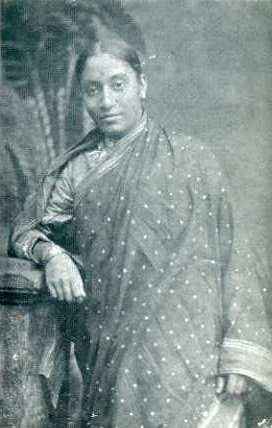
Rukhmabai, a physician, fought against child marriage. The Age of Consent Act was passed in 1891 as a result of her efforts.

The Second Phase
This phase began in 1915 and ended with India's independence in 1947. The struggle for independence during this era saw nationalist sentiments on the rise.
Gandhian Politics

Gandhi had returned to India from South Africa on January 9, 1915. He gained popularity after the success of the Champaran Satyagraha (insistence on truth). On August 1, 1920, he launched his first large scale movement, the Non Cooperation Movement, which involved non-violent boycott of British products and adoption of swadeshi (made in India) products. Women participated actively, boycotting foreign goods, picketing liquor shops, organizing protests and marches, and breaking traditional gender roles. Sarojini Naidu was a prominent face of the movement. Gandhi's wife, Kasturba, played a significant role alongside Gandhi. Although after the Chauri Chaura violence, Gandhi called back the movement in February 1922.

In 1930, Gandhi undertook the Dandi March or Salt March. He broke the rule of British monopoly on salt production by making salt from sea water. On March 12, the Civil Disobedience Movement began. Women again participated actively, with Naidu and Kasturba Gandhi as prominent figures. In fact, Naidu was chosen by Gandhi to lead the salt satyagraha who led a procession of 2,500 people to the Dharasana Salt Works. Women organized protests and boycotts, resisting police and social repression valiantly. The British brutal repression and growing violence compelled Gandhi to call off this movement as well in March 1931.

In 1939, World War II began, and the British was invested against the Nazis in Germany. On August 8, 1942, Gandhi gave his famous "do or die" speech, marking the beginning of the third mass movement, the Quit India Movement. An afraid British arrested the top leadership, and Gandhi was placed under house arrest. Then came Aruna Asaf Ali. She was a woman who hoisted the Indian national flag in defiance and fled the arrest. She started broadcasting on the radio while underground, spreading the word of Gandhi across the nation, published magazines like Inqilab and pamphlets, maintaining the momentum of the movement. The British were unable to trace her, and people remained aware of the cause. She came out of hiding in Bombay only after the arrest warrant was withdrawn in 1946.

The Quit India Movement was the largest movement till then, with spectacular participation from different parts of the country. In the 1943 film, Kismat, the song "door hato ae duniya waloHindustan humara hai", was sung by a group of women, Amirbai Karnataki being the lead singer. Matangini Hazra, nicknamed "Gandhi Buri" meaning Old Lady Gandhi, was a key figure during the movement and became a martyr to British police firing. This movement, like others, had instances of violence too, but Gandhi did not take the movement back this time and blamed the violence on British brutality instead, a strategic move considering a financially weak Britain. The situation was such that even some of the British public supported the Indian cause. The USA pressurized Britain to grant independence to India. The Labour Party in Britain was also against colonization and focused on India. They even won elections post World War II.
The collective efforts of women and men brought the British government to its knees. Britain finally left India in 1947, and India awoke to life and freedom, in the words of India's first prime minister, Jawaharlal Nehru, in his speech "Tryst with Destiny."
Dr. B.R. Ambedkar and Flaws in Gandhi
Dr. Bhimrao Ambedkar, or Babasaheb Ambedkar, known as the messiah of Dalits, was a prominent figure in India's freedom struggle and social revolution. He was born Dalit and faced brutal repression by the Brahminical society. As a result, he developed radical views and wanted the complete annihilation of caste from the society. Just like Gandhi, Ambedkar believed in nonviolence, giving slogans like "Educate, Agitate, Organize." Gandhi, on the other hand, supported the varna system, believing in reform rather than dismantling it, which was a point of clash between Ambedkar and Gandhi. Ambedkar even refused to call Gandhi a Mahatma.

On gender, Gandhi's past views were problematic. He believed in traditional gender roles, with women doing housework. He engaged in victim blaming and even later, conducted controversial celibacy experiments where he slept with unclothed women to test his inner strength. Although Gandhi's had views evolved over time, the celibacy experiments and his early life thoughts are still matters of debate. Ambedkar, on the other hand, was one of the biggest reformers to champion women's rights. He famously said, "I measure the progress of a community by the degree of progress which women have achieved." He famously burned the Manusmriti on December 25, 1927, the same book which normalized the caste system and marginalization of women through practices like Sati. Ambedkar was marginalized since childhood and understood oppression deeply and even better than Gandhi. That does not mean Gandhi was a villain or Ambedkar was a hero. Both were complex characters with complex lifestyles that need nuanced analysis.
The Third Phase
Post 1947, immediately after independence, India witnessed horrific religious violence at the India Pakistan border and within India, between Hindus and Muslims, thanks to the disunity created by the seeds of communal hatred sown by the British. Women were primary targets of sexual violence and the savagery of men across both communities. Gandhi went from place to place to stop these riots and save those innocent women and men from danger. Nathuram Godse, often considered India's first terrorist, assassinated Gandhi in 1948 for being supportive of Muslims and anti Hindu, in Nathuram's words, which was obviously a lie! Ironically, Gandhi was actually going to an area dominated by Muslims to save Hindus from a potential riot that day.
Godse had predicted a Hindu unity after the assassination of Gandhi. Hindus did unite, but against him and organizations like the RSS (Rashtriya Swayamsevak Sangh). Now, RSS was a controversial organization that was against Gandhian principles of religious unity, even complied with the British during Quit India Movement, and supported the imposing of Hindutva, which meant traditional practices affecting women and lower caste people would be reinforced. The RSS was viewed as complacent in the assassination and was banned by the then Home Minister, Sardar Vallabhbhai Patel, but the ban was later lifted by Nehru on the condition that the RSS would continue as a cultural organization.
After India became a republic on January 26, 1950, came India's first general elections from October 25, 1951 to February 21, 1952. The RSS had wanted traditional religious institutions and hence supported the conservative Bharatiya Jana Sangh. Nehru and Ambedkar fought against them with the Hindu Code Bill as one of the main issues, which would establish an egalitarian Hindu law. Nehru won the elections, and the bill was implemented, in steps due to pressure from Brahmins. Ambedkar resigned in protest due to the delay. Nevertheless, Nehru and Ambedkar ensured women had rights in India. The Hindu Succession Act of 1956 gave women the right to inherit parental property. Laws like the Hindu Marriage Act of 1955 gave women equal rights to divorce and remarry, prohibited child marriage, and allowed for inter-caste and love marriages.

Indira Gandhi became the first female prime minister of India in 1966 and was one of the strongest leaders in Indian political history. She handled the Nathu La and Cho La clashes against China bravely in 1967 and changed the world map in 1971 with the birth of Bangladesh. She came to be known as the Iron Lady. She, however, tried to be a dictator in 1975 declaring the Emergency period, with mass suppression and arrest of opposition. The national emergency came to an end in 1977, followed by her defeat in elections. In 1980, the public forgave her past actions and she became the PM again until she was assassinated by her Sikh bodyguard in 1984. During her time, the Green Revolution and Operation Flood, agricultural programs to increase crop production, and the beginning of India's nuclear program took place under her governance. She also added terms like "Socialist" and "Secular" in the Preamble of the Constitution.

Some other important laws have been passed as well: the Special Marriage Act of 1954 gave marriage rights to women. The Dowry Prohibition Act of 1961, the Commission of Sati (Prevention) Act of 1987, the Indecent Representation of Women (Prohibition) Act of 1986, and the Protection of Women from Domestic Violence Act of 2005 were enacted. Transgender rights are protected under the Transgender Persons (Protection of Rights) Act, 2019, which prohibits discrimination in areas like employment, education, and healthcare, following a landmark Supreme Court judgment.
Even the Constitution of India architected by Ambedkar prohibited discrimination on the grounds of gender. Women had suffrage and other basic rights since day 1 of independence, unlike most of the European democracies. 22 women were elected to Lok Sabha after the first general elections, which is a huge number according to that time. It is surprising and disheartening that some upper caste women often abuse and criticize Ambedkar irrationally without realizing that the reason they are able to criticize Ambedkar was Ambedkar himself.
Final Thoughts
India has had a pretty progressive journey, yet traditional norms still thrive in society, which are frustrating. Victim blaming attitudes, moral policing of girls, and strict rules specifically for women are prevalent in almost all homes. Casteism, despite being banned, is still alive. Inter-caste marriages are still stigmatized. Women from lower castes face brutal oppression and are pushed into brothels and sex work. Rape rates are not low either with under-reporting being common. Marital rape is not even considered a crime. Legal progress has been made, but radical social transformation still awaits. The journey from the dark ages to liberation is ongoing, and true feminist goals can only be achieved when both legal frameworks and social attitudes transform together.




Comments
Post a Comment